
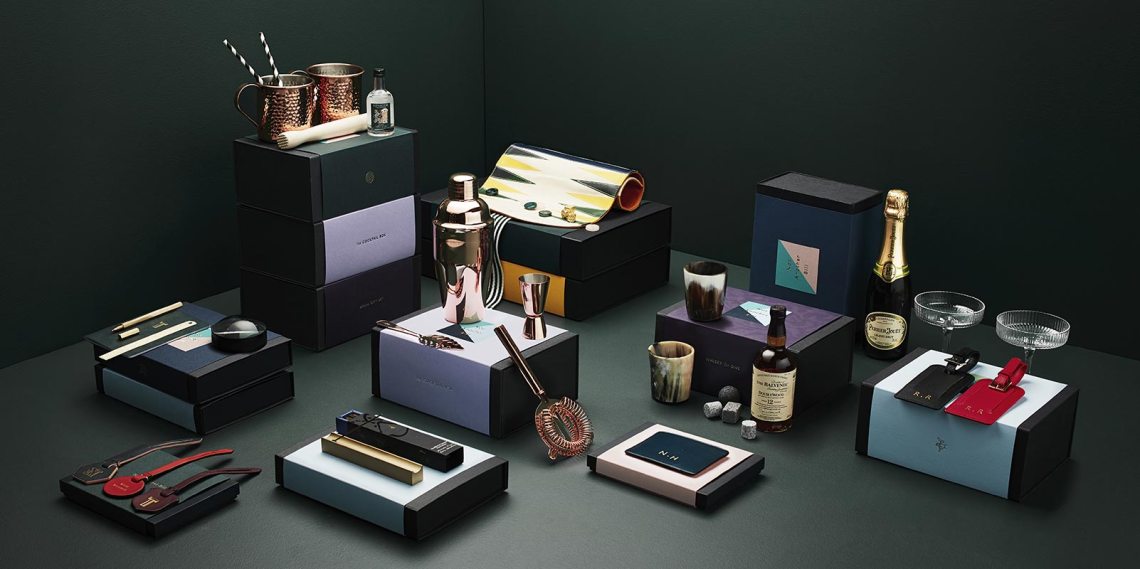
When companies think about making a strong first impression on new hires, the conversation often comes down to two options: a cash joining bonus, or a well-designed welcome kit. Both are common tools in the onboarding playbook, but they serve very different purposes — and understanding which one actually shapes an employee’s early experience is more nuanced than it first appears.
At Craft Enterprises, we work closely with HR and talent teams who are increasingly asking this exact question: should onboarding budgets go toward a monetary joining bonus, a physical welcome kit, or some combination of both? Here’s what the evidence and our decades of experience with corporate clients suggest.
Understanding the Two Approaches
A joining bonus is a one-time monetary payment offered to a new hire, typically as an incentive to accept an offer or to compensate for benefits lost when leaving a previous employer (such as forfeited bonuses or stock options).
A welcome kit, on the other hand, is a curated set of physical items — branded merchandise, useful gadgets, stationery, apparel, or lifestyle products — given to a new employee, usually on or before their first day.
On the surface, these seem like very different tools solving different problems. But when it comes to shaping how a new hire feels about their decision to join — and how connected they feel in those critical first weeks — the comparison becomes more interesting.
What Joining Bonuses Do Well
Joining bonuses are effective at one specific thing: closing the gap in a competitive offer negotiation. If a candidate is choosing between two similar roles, or needs to be compensated for something they’re forfeiting at their current employer, a joining bonus can be the deciding factor.
However, joining bonuses have a few well-documented limitations:
- They’re quickly forgotten. Once the money lands in a bank account and gets absorbed into regular expenses, it rarely leaves a lasting impression tied to the employer.
- They don’t build emotional connection. A bonus is transactional — it rewards the decision to join, but does little to shape how the employee feels about the company culture itself.
- They can create misaligned expectations. Employees motivated primarily by a bonus may be more prone to “bonus-hopping” — the same financial incentive that got them to join makes them equally susceptible to leaving for a better one elsewhere.
What Welcome Kits Do Well
Welcome kits work through a completely different mechanism — not through financial incentive, but through emotional and psychological impact. A thoughtfully designed welcome kit does several things at once:
- Creates a tangible first impression. Physical items — especially well-branded, high-quality ones — are memorable in a way that a bank transfer isn’t. Employees photograph them, share them on social media, and mention them to peers.
- Signals organizational culture immediately. The quality, thoughtfulness, and presentation of a welcome kit tells a new hire a lot about how the company operates — attention to detail, investment in people, and brand identity.
- Reduces first-day anxiety. Starting a new job is emotionally loaded. A welcome kit waiting at the desk (or shipped home for remote hires) reduces the sense of being an outsider and replaces it with a sense of already belonging.
- Has lasting, repeated visibility. Unlike a bonus that disappears into a bank statement, a quality notebook, bag, or gadget from a welcome kit gets used repeatedly — at work, at home, in meetings — reinforcing the employer connection every time.
So, What Do Employees Actually Prefer?
The honest answer is: it depends on what problem you’re solving.
If the goal is closing a competitive offer or compensating for a specific financial loss, a joining bonus remains the more direct tool — no welcome kit can substitute for real financial need in a negotiation.
But if the goal is shaping how a new hire feels about their decision on day one, day thirty, and beyond, welcome kits consistently outperform bonuses in emotional impact and lasting impression. Employees frequently report that a thoughtful welcome kit made them feel genuinely excited and valued in a way a bonus payment simply didn’t — because a bonus rewards a decision already made, while a welcome kit welcomes them into what comes next.
There’s also a practical, budget-related insight many HR teams miss: welcome kits are significantly more cost-effective at scale. A joining bonus that feels meaningful to an employee often needs to be a substantial amount — while a well-curated welcome kit can create an outsized emotional impact at a fraction of that cost, especially when procured in bulk through an experienced corporate gifting partner.
The Case for Combining Both
The strongest onboarding strategies don’t treat this as an either/or decision. Many of our corporate clients use joining bonuses strategically — reserved for competitive hires or senior roles where financial negotiation matters — while using welcome kits universally, for every new hire, regardless of level or offer complexity.
This combination covers both bases: the bonus addresses the financial and competitive dimension of hiring, while the welcome kit addresses the emotional and cultural dimension of onboarding — a dimension that directly influences early engagement and retention.
What Makes a Welcome Kit Actually Effective
Not every welcome kit lands the same way. To genuinely shape a new hire’s first impression, a welcome kit should be:
- Practical, not just decorative — items employees will actually use, not shelve.
- Well-branded, but tastefully so — subtle, quality branding rather than logo-heavy merchandise.
- Consistent in quality across all hires, especially important for companies onboarding in batches.
- Delivered reliably and on time, including for remote hires who need kits shipped directly to their homes.
- Cost-efficient at scale, without compromising the perceived quality of individual items.
This is exactly where working with an established corporate gifting partner makes a measurable difference — bulk procurement, consistent branding, and reliable delivery timelines that in-house teams often struggle to manage alongside their core HR responsibilities.
Final Thoughts
Joining bonuses and welcome kits solve different problems, and the strongest onboarding strategies use each for what it does best. But when it comes to what employees remember, talk about, and associate with their early experience at a company, welcome kits consistently create a deeper and more lasting impression than a one-time payment ever could.
If your organization is rethinking its onboarding strategy for the year ahead, Craft Enterprises can help you design and execute a welcome kit program — from product curation to branding to bulk delivery — that gives every new hire a first impression worth remembering. Get in touch with us to explore our welcome kit solutions.